


Welcome to the cable jungle! When it comes to electrical connections, terms like wire, stranded wire, conductor, and cable are buzzing around. Many people use these words interchangeably – and that’s no surprise, because in everyday life people often just call everything a “cable”. In industry, and especially in cable assembly, however, these distinctions are important – and this is exactly where CiS comes in. You don’t need to know the technical terms, because we know what matters and provide you with expert advice. In this article, we give you an overview of the meanings and differences – clearly explained, technically sound, and without requiring any prior knowledge.
What is a wire?
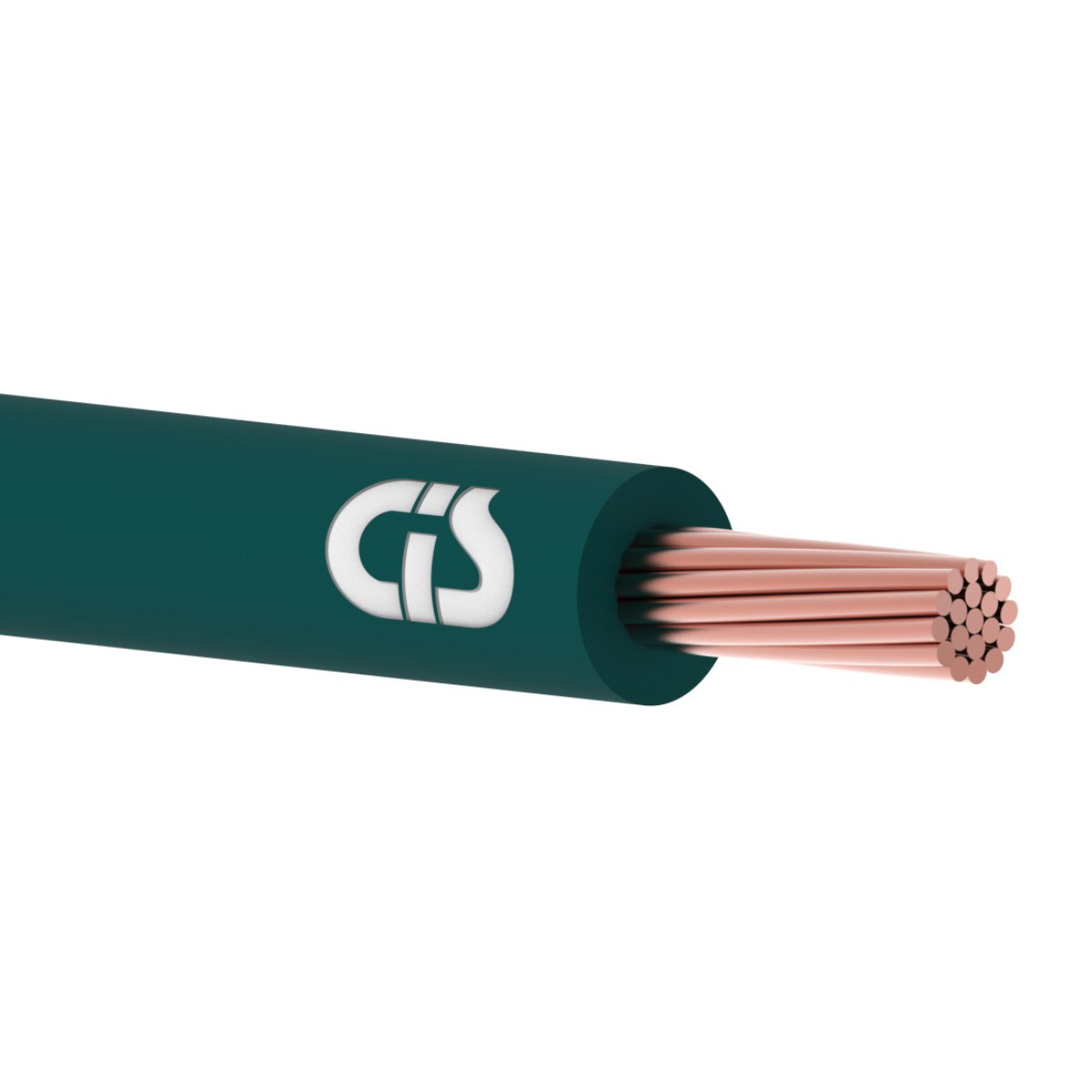
Wire – this is a word that almost everyone has heard before. Technically speaking, a wire is a single, solid metallic conductor. Imagine a single copper “strand” that can conduct electric current. This conductor is usually solid, meaning it is made from one piece of metal (mostly copper, sometimes brass, aluminium, or steel) without being subdivided into thinner strands. It is therefore also referred to as a solid wire or single-core conductor. In most practical applications, a wire is additionally surrounded by electrical insulation – a protective layer of plastic or rubber that prevents current from flowing uncontrollably to the outside or causing short circuits. This insulation not only protects the surroundings and other conductors, but also enables safe handling of the wire.
- Structure and properties: A wire typically consists of a continuous conductor. It can be bare or – in most applications – surrounded by insulation in the form of plastic or lacquer. Because it is made from a single piece, a wire is relatively rigid and retains its bent shape once you bend it. It can therefore only be bent to a limited extent and should not be bent back and forth repeatedly – otherwise it may break at one point (similar to a wire coat hanger that you bend back and forth too often).
- Advantages of solid wire: Due to its solid design, a wire often has a slightly lower electrical resistance than a stranded conductor (more on this in a moment) for the same cross-section and can conduct high currents well. Interference effects (electrical attenuation or losses) are also often lower with a thick, solid conductor. In certain cases – for example at high frequencies – a single wire also offers advantages in terms of signal quality.
- Disadvantages and usage: The limited flexibility is the biggest drawback. Wherever mobility is required, a rigid wire can quickly fail. In addition, if the wire breaks at one point, the electrical connection is completely interrupted. For this reason, solid wires are mainly used where they are installed permanently and do not move. Examples: The electrical conductors in house walls (installation wire in conduits) or in junction boxes, or internal wiring in devices that are not exposed to movement. In control cabinets and systems, rigid single cores (usually single-core conductors) are used when routing can be done straight and fixed. Typical versions include, for example, H07V-U conductors – the “U” stands for “uni” = single-core, commonly also simply referred to as “wire”.
In summary: A wire is a single, solid yet plastically deformable metal rod that is available in many different cross-sections. Its main function is to conduct electrical energy.
What is a stranded wire?
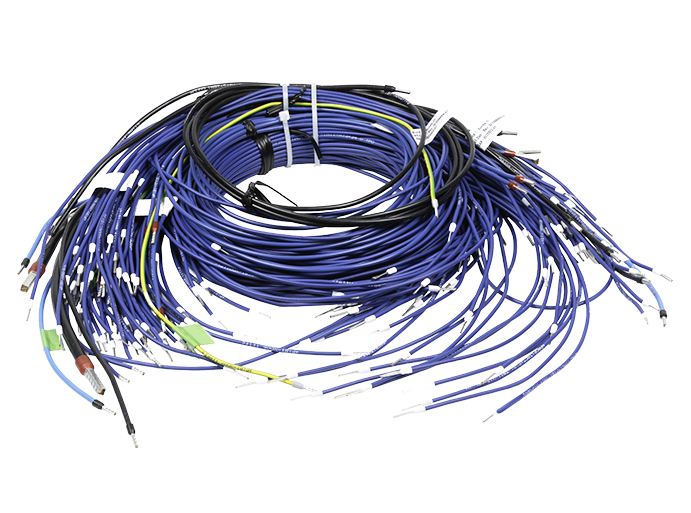
Let’s now turn to stranded wire. The term “Litze” is often heard in connection with flexible cables. But what exactly is stranded wire? The word may sound unusual, but it stands for something very practical: stranded wire is a flexible conductor made up of many thin wires. If solid wire is the rigid lone wolf, then stranded wire is the team of many fine little wires, all together within a single layer of insulation. It is also referred to as stranded wire, stranded conductor, or fine-stranded conductor.
- Structure and characteristics: Stranded wire consists of several thin individual wires that are twisted or braided together. Each of these individual wires has a circumference in relation to the total cross-section. They are often extremely thin and only fractions of a millimetre thick, but in conductors with a large cross-section the individual wires can also be correspondingly thicker. Together, they form a bundled conductor that overall provides the desired cross-section. This bundle is, in turn, usually surrounded by plastic insulation. Example: A common flexible stranded conductor with a cross-section of 1.5 mm² consists of 30 copper strands with a diameter of 0.25 mm, twisted together to form a single conductor. From the outside, it looks like “one cable”, but inside there are 30 fine copper wires!
- Characteristics: Due to this design, stranded wire is very bendable and flexible. It can be bent back and forth multiple times – compared to solid wire, stranded wire is more flexible and can be reshaped repeatedly. Flexibility generally increases with the number and cross-section of the individual wires: the more fine wires, the more easily the stranded conductor can be moved. This is also classified in standards: single-core conductors (solid wire) are defined as Class 1, while finely stranded conductors are Class 5 and extra-finely stranded conductors (with a particularly large number of extremely thin strands) are Class 6 according to IEC 60228 / VDE 0295. These Class 5 and Class 6 conductors are commonly referred to simply as “stranded wires”. Another advantage: if one of the many fine strands breaks, current will often still flow through the remaining wires – the stranded conductor will usually continue to work even if a few strands snap (though of course only up to a certain point).
- Areas of application: Stranded conductors are used wherever movement, vibration, or flexibility is required. Think of device cables that are constantly plugged in, unplugged, and moved (from irons to machines in production). Or of cables in automobiles: there is constant shaking and vibration – rigid wires would break, so stranded conductors are used. Stranded conductors are also indispensable in robotics or in energy supply systems for moving parts (e.g. drag chains in machines). Even in electrical installations, stranded conductors are used, for example as flexible connection leads for luminaires (often designated as H07V-K).
In short: Stranded wire is a multi‑wire, flexible conductor. It is easy to bend and, up to a certain point, resistant to breakage under movement. Where a solid wire reaches its bending limits, stranded wire handles it with ease. However, its construction is more complex, and for the same conductivity it is usually slightly thicker (because small air gaps and the thin insulation of the individual strands take up space). In most industrial applications, stranded conductors are therefore used – flexibility and durability are top priorities here.
What is the difference between a strand and a wire?
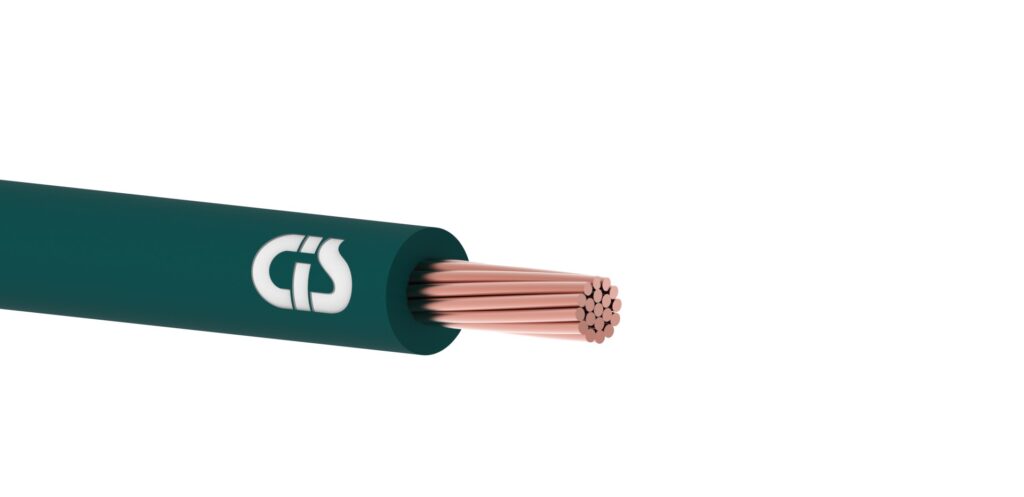
A wire is a single, solid conductor – rigid and dimensionally stable, but not very flexible. It is well suited for fixed installations where no movement occurs. Stranded wire, on the other hand, consists of many fine individual wires twisted together. This makes it significantly more flexible and resistant to bending stress. In applications involving movement or vibration, stranded wire is therefore the better choice – for example in devices, vehicles, or robotic systems.
What is a conductor?
The term conductor is used somewhat more generally in everyday language and is applied differently in electrical engineering. Simply put, an electrical conductor is any structure that transports current or signals from point A to point B. A conductor can therefore be many things: a single insulated wire, a bundle of cores, a high‑voltage rope, or a flat ribbon cable. Thus, “conductor” is an umbrella term – essentially the collective term in the cable jungle.
- General definition: A conductor refers to one or more insulated conductors that transmit power or data. These can be single‑core conductors (e.g. an insulated wire or a single stranded conductor) or multi‑core conductors (several insulated cores together within one insulation). The important point is: a conductor always has insulation around the conductor so that the current flows in a controlled way and nothing short‑circuits.
- Colloquial usage: In everyday language, we often use the word “cable”, but technically speaking, professionals frequently talk about conductors. For example, a professional doesn’t necessarily say extension cable, but extension conductor. The power cables on devices are correctly called connection conductors. Even what runs from the electricity meter through the walls to the sockets are installation conductors.
- Conductor vs. cable: Conductor and cable are often used as synonyms, but there are subtle differences (more on this in the next section). In some definitions, cables are described as special conductors with a particularly robust outer sheath, often for underground installation or harsh environments, while conductors are the more general connection conductors for devices and systems. For example, one speaks of an underground cable (thickly sheathed, for underground applications) versus a control conductor in a control cabinet (more thinly insulated, since there is no mechanical stress from outside in the cabinet). Nevertheless, in German everyday language, “Kabel” has become the term used for almost everything, and “Leitung” is mostly used in combination with a specific purpose (e.g. data conductor, mains conductor, control conductor).
- Practical examples:
- A single flexible copper core with insulation (e.g. a red‑sheathed stranded conductor for connections in a control cabinet) is a single‑core conductor – colloquially, one could also say: a single conductor.
- Several such cores enclosed by a sheath form a multi‑core conductor. For example, an NYM‑J 3×1.5 (the grey sheathed conductor used in houses) is precisely that: three cores (live conductor brown, neutral conductor blue, protective conductor green‑yellow) in a common sheath. Technicians refer to this as a sheathed conductor for buildings.
- An overhead line on high‑voltage pylons is also a conductor in the technical sense, even though it consists of bare wire – here, the air provides the insulation. This shows that “conductor” really refers to any type of current‑carrying connection, insulated or uninsulated, depending on the context.
Remember: Conductor = umbrella term. Whenever you don’t want to go into detail, “conductor” is the safe term. In industry, people talk, for example, about cables and conductors, usually as a double mention to cover all variants. In a broader sense, every cable is also a conductor, but not every conductor is a cable (purely linguistically speaking). We will now take a closer look at what exactly defines a cable.
What is a cable?
Let’s come to the word everyone knows: cable. In everyday life, we call almost everything a cable – from the phone charging cable to the thick power cable going to the distribution board. Technically, “cable” has a somewhat more specific meaning: in many cases, a cable is understood to be a multi‑core conductor with a protective sheath, often designed for more permanent installation or harsh environments. Put simply, you could say: a cable is a particularly robust conductor.
- Definition and structure: A cable usually consists of several insulated conductors (cores) that are housed within a common outer sheath. This sheath provides mechanical protection, holds the cores together, and shields them from environmental influences (moisture, chemicals, UV light, etc.). However, there are also single‑core cables, such as high‑voltage cables, which consist only of a thick conductor plus insulation and sheath. The crucial element is the sheath: it often distinguishes a cable from a simpler conductor. The sheath makes the cable more robust and suitable, for example, for underground installation or use under water.
- Anwendungsunterschied: Traditionell sagt man: Kabel werden häufig unter der Erde oder generell fest verlegt, während (flexible) Leitungen eher oberirdisch, sichtbar und beweglich eingesetzt werden. Zum Beispiel: Ein Erdkabel im Garten (für die Gartenbeleuchtung) ist speziell gegen Feuchtigkeit und Druck geschützt – ein typisches Kabel. Das Anschlussleitung Ihrer Waschmaschine nennt der Fachmann auch Gummischlauchleitung (eine flexible Leitung für Geräte). Aber in der Umgangssprache bleiben beide „Kabel“, was fachlich natürlich nicht korrekt ist. Der Unterschied liegt also im Detail und im Zweck:
- Kabel: Höhere Anforderungen an Widerstandsfähigkeit. Beispiele: Erdkabel, Seekabel, schwere Gummikabel für Baustellen, Industriekabel.
- Leitung: Allgemeine Verbindungsleitungen, die zwar auch isoliert und oft ummantelt sind, aber nicht zwingend für extreme Bedingungen. Beispiele: Verlängerungsleitung (Telefonleitung, Netzleitung, Steuerleitung in Maschinen (innerhalb von Gehäusen).
- Everyday use in industry: In catalogues and standards, you will often find both terms: “cables and conductors” as a category. For example, a manufacturer offers cables for fixed installation and conductors for movable loads. The boundaries are fluid. There are special cables that are extremely flexible (e.g. highly flexible robot cables with thousands of fine stranded conductors inside – strictly speaking conductors, but colloquially they are called cables).
- Rule of thumb: If you want to be very formal, you can remember: cable = conductor that is laid underground or in the sea. Conductor = general term for cables/wires, especially for common connection conductors. But outside of technical discussions, it is not wrong to refer to everything as a “cable” – everyone will understand it. Only in quotations or specifications should the terms be used clearly so that no misunderstandings arise.
Additional info: In English, this distinction does not really exist – there, “cable” is usually used for everything (and “wire” for single conductors). This means that our German habit of differentiating between “Kabel” and “Leitung” is somewhat unique. In practice, however, it is more important to understand how a cable or conductor is constructed (number of cores, cross‑section, stranded or solid, shielding, sheath material, field of application).
What is the difference between cable and conductor?
Technically speaking, every conductor is a carrier for power or data transmission, consisting of one or more insulated conductors – it is the umbrella term. A cable, on the other hand, is usually a multi‑core conductor with an additional, robust outer sheath that makes it particularly resistant. Cables are preferred in harsher conditions or for fixed installation, for example underground. Conductors, by contrast, are intended more for flexible, visible, or internal connections. Nevertheless, the terms are often used as synonyms in everyday language – a correct distinction is usually made only in professional contexts, for example in cable assembly by experts such as CiS.
Wire, stranded wire, conductor, cable – the differences at a glance
After explaining the terms individually, we will now summarise the most important differences in a clear way. Here is a brief “translation” of the terms:
- Wire: A single metallic conductor, usually rigid (solid wire). Keywords: single‑core, not flexible, for fixed installations. Example: The copper wire in domestic installations or in distribution boxes.
- Litze: Ein Leiter aus vielen dünnen Drähten, miteinander verdrillt. Stichworte: feindrähtig, sehr flexibel, für bewegte Anwendungen. Beispiel: Die feinen Kupferlitzen in einem Gerätekabel, die auch Biegungen und Bewegungen mitmachen.
- Conductor: Umbrella term for one or more insulated conductors. Can be single‑core (a wire or stranded conductor with insulation) or multi‑core. Keywords: general “electrical connection”, available in many variants (data conductor, power conductor, etc.). Example: A three‑core rubber conductor for a colloquial extension cable or a control conductor in a machine.
- Cable: Usually a multi‑core conductor with a common sheath, often designed for special stresses (mechanical, weather). Keywords: robust, often permanently installed or specially protected. Example: An underground cable in the garden.
Importance in cable assembly and industrial applications
In industrial practice, choosing the right type between wire, stranded wire, conductor, and cable determines the reliability and service life of your electrical connection. In cable assembly – that is, the production of ready‑to‑install cables and cable harnesses according to customer requirements – these components are deliberately combined:
- When a conductor harness – commonly called a wiring harness – is manufactured for a machine, stranded cores are usually used, because the conductor bundle is bent during assembly and may later be exposed to vibrations. Several such cores (conductors) are bundled, optionally sheathed or wrapped with tape – voilà, a cable set tailored to the device is created.
- For control conductors in control cabinets that the installer lays only once on site and that then remain fixed, single‑core conductors (wires) can also be a sensible choice. They can be bent neatly into shape and laid cleanly in cable ducts. However, many control‑cabinet builders nowadays prefer finely stranded conductors with ferrules, because these provide better contact when clamped and offer more flexibility during installation.
- In environments involving movement (e.g. drag chains, robot arms), specially designed highly flexible cables are used. Internally, these consist of stranded conductors with maximum bending strength (extra‑fine stranded, often Class 6) and additional elements such as fillers, textile threads, and a very elastic sheath. This nicely illustrates how the terms interact: you purchase a “cable” that consists of many “stranded conductors” – which, in everyday language, would be referred to as a flexible conductor.
- For high‑current connections or underground installation, on the other hand, it is better to use solid conductors or a few thick stranded conductors in order to maintain a large cross‑section and ensure mechanical stability. A classic underground cable, for example, has rigid single wires as cores, because it is laid in the ground once and is intended to remain there for decades. The outer sheath protects against moisture and soil – this is what makes it a cable in the narrower sense.
CiS electronic GmbH, as an experienced cable assembler, understands the importance of these differences very well. In their daily work, our experts select the appropriate components according to the customer’s requirements: Should the connection be extremely flexible? Will the cable be subjected to mechanical stress or chemical influences? Is a special sheath required? – All these questions determine whether wire or stranded wire, and which type of conductor or cable, will be used. Thanks to this expertise, reliable connections are created for a wide range of industries, from automation and medical technology to automotive applications.
Conclusion: Keeping track in the cable jungle
For you, it doesn’t have to be complicated – that’s what we are here for.
In summary, wires and stranded wires refer to the conducting elements themselves (rigid or flexible), whereas conductors and cables generally denote the complete system – that is, one or more conductors, with or without a special sheath.
But don’t worry: as an industrial customer, you don’t need to know all the technical details or have special prior knowledge – that’s exactly why we are at your side. CiS provides the expertise, experience, and solutions to support you in the best possible way – regardless of what information or questions you bring to us.
Simply get in touch with us. We listen, advise, explain – and work together with you to develop the right solution.
The information in our blog posts is aimed at technically proficient readers and is based on the current state of knowledge at the time of publication. We do not assume any liability for its implementation. **Automatic AI translation**